The Art of Doing Less

Hi again friends! After what feels like months, I am finally back to blogging and sharing my experiences as a full-time caregiver. There have been lots of reasons for my absence (weddings, getting a new roof on the house, celebrating my mom finally winning her disability case (!!)), but the main reason I’ve been gone is that I am practicing doing a whole lot less.

Over the last three weeks I’ve been doing a whole lot less blogging, less sharing my personal experiences, less going out, and a lot less of other things as well. And that’s not to say that doing less feels rewarding or even enjoyable, but over the last year of my caregiving journey I have learned to accept that I cannot give 100% of myself to everything I want or need to do all the time, which has been the most humbling and equally most empowering lesson of all.

When I started this blog I had every intention of maintaining the posting schedule I’d blocked out in my planner along with touching on the content ideas I’d already brainstormed, but what I began to realize is that while blogging is fun for me, I couldn’t give 100% of my brain power to it while also doing things like home improvement projects and managing my family’s monthly budget. Only giving a portion of my effort to something I am passionate about just didn’t seem fair to myself or to my loyal readers, so in the spirit of quality over quantity, I’ve started doing a lot less and instead focusing all of my attention on just one or two things that I have the capacity to give my all to.

And, just like every recovering perfectionist out there, I’ve caught myself feeling guilty a few times for not sticking to my plan and posting every week. When those feeling pop up I quickly remind myself that, just like anybody’s else’s hobbies, this blog is FOR FUN. There are no standards that I, or anybody else needs to hold themselves to when a hobby is concerned, and there are no goals that I personally need to achieve (except to build community and share resources) through blogging. Research shows that caregivers can experience burnout quickly and at a much higher rate than your average 9-5 employee, and holding myself to any standard beyond “keep mom alive and happy” seems outright unfair given that information.

All in all, I highly recommend doing less in general to anybody, caregiver or not. The lifestyle change has been extremely helpful for me, even with the occasional twang of guilt. However, I do recognize that the decision to slow down and do less is not a viable one for many people with families, careers, and busy schedules, but if you, dear reader, are also thinking “Gee I’d like to do less”, maybe it’s time to try it out wherever and however you can. It could be as simple as choosing not to maintain a Martha Stewart magazine worthy linen closet or letting your leg hair grow out a few days longer before you shave (because it’s 2022 and who cares anyway). There are so many simple ways we can all just do a little bit less.

And, if you are like me and have a habit of holding yourself to the highest standard imaginable, try to recognize that there are very few standards in life we truly NEED to maintain. We can generally get by comfortably while doing much less than we have been conditioned to do, and even if that is uncomfortable at first, it can be extremely beneficial in the long run.


Preventing Caregiver Burnout

Burnout- We’ve all heard about it and maybe even experienced it at some point. With so many of us giving our all to our careers and putting our wants and needs in the back seat, burnout has quickly become the state of mind we all know and try to avoid at all costs. Of course, preventing burnout looks different for everybody, and depending on your specific field of work there may be different resources available. But, if you’re a full-time caregiver like me you’re in luck today! I’ve done a little homework and come up with some of the best caregiver resources to prevent the emotional and physical burnout that come with the job.

As much as we love our family, too much time with mom or dad can drive us up a wall. Having another family member or good friend spend time with our loved one for a few hours is a great way to create a little “me time”, but what if your body is telling you that you need an entire weekend away? Fear not- This is exactly what caregiver respite programs are for. Respite programs offer a safe place for mom or dad to stay for a short time while you take care of whatever you need to get done, or just get out of town for a bit. Most respite programs offer medical support for a variety of needs including administering medication and assistance with daily tasks like bathing and eating. It’s always important to check with your respite program to make sure that your loved one qualifies and the program can provide the care your loved one needs.

Respite programs: The National Respite Locator is a great tool to help connect caregivers with local respite programs in their area. Check it out here: https://archrespite.org/respitelocator and if you’re caring for someone aged 60 or older Eldercare Locator can also help find resources in your area: https://eldercare.acl.gov/Public/Index.aspx

From my personal experience, one of the reasons caregiver burnout is so different (and in my opinion worse) than any other burnout I’ve experienced is because the work caregivers do is almost entirely unpaid. There is, however, a solution (sort of). Financial compensation through Medicaid waivers is available for those who qualify with pay rates ranging from minimum wage up to around $15 per hour depending on your location. The application and waiver process do take a bit of time to get through and not every caregiver qualifies but for those who do, having a steady source of income can help relieve some of the financial stress that comes with caregiving. Find your state’s Medicaid site and submit an application here to see if you qualify: https://www.medicaid.gov/

And while we’re on the topic of Medicaid- Are you as a caregiver eligible for medical insurance through Medicaid? Health insurance is extremely expensive when it’s not provided through a company which means full-time caregivers usually find themselves without insurance altogether. Preventing burnout can also look like checking in with your doctor to manage the physical and emotional stress that comes with the job. Medicaid is an inexpensive health insurance option for anybody who doesn’t earn much or is currently unemployed, and can be an invaluable tool for caregivers who don’t qualify for private or affordable healthcare options. Medicaid.gov is a great place to start to check out all of the benefits that may be available to you and your family through this government program.

Caregiving can be an extremely demanding job, but I hope that I’ve made it a little easier for anybody in a similar position as mine by sharing a few widely accessible options to prevent caregiver burnout before it starts. If you are a caregiver struggling to find resources for your specific situation and need help, or if you have another great resource to add to this list please reach out to me at themillennialcaregiverblog@gmail.com to connect!

Who We Are At Our Messiest

I am and always have been the “mom friend”. You know, the one who has wet wipes and bandaids within arm’s reach any given moment, and the one you can rely on to make plans and actually follow through with them. For as long as I can remember, reliability has been a huge part of who I am as a person and, the wild part is, I used to be really proud to identify with that side of my personality. I thought being reliable made me special or different, or even better than everyone else around me because I was going above and beyond what other people my age were doing. But boy, was I wrong about that one. It’s taken me close to 30 years and becoming a caregiver to realize that the ultra-responsible attitude I used to cling to isn’t a cute quirk, it’s a trauma response to growing up with a messy family life.

My childhood was mostly normal, but my mom has never had perfect health and that was something I was very aware of growing up. She’s been a type 1 diabetic since the age of 11, and like so many other diabetics, has struggled with depression at times. As the oldest daughter I felt it was my place to help out around the house as often as possible to attempt to lift some of life’s responsibilities off of her shoulders. But over time those helpful intentions warped into something much bigger- Unhinged perfectionism. For years I tried so hard to meet the needs of others around me that, for a while, I completely lost who I was, and I don’t think it really hit me just how far down the perfectionist rabbit hole I’d gone until the beginning of this current and very messy season of life as mom’s full-time caregiver.

As much as we try, being a caregiver for anybody is SO MESSY. I mean, not just physically, but mentally and emotionally too. Most days I still try to show up as that “mom friend” who has a bandaid at the ready, but there is absolutely no room left for perfectionism. I’ve got a rock solid morning routine, but at least 2 days a week I still forget to change out of my pajamas until noon, and sometimes I just need a few minutes to scream into a pillow when I feel overwhelmed with medical bills and appointments, and that’s okay. (I can’t stress enough how much just typing “that’s okay” feels uncomfortable to me, but here’s to a new chapter of me!)

Learning to embrace my current and very messy season of life was my goal from the beginning, but what I didn’t expect was to genuinely start enjoying it. Me, enjoying a mess? I know, it sounds like a fairytale to me too, but when I dropped the idea of being perfect for others I discovered a lot more room left for me, my creativity, and doing things that bring me happiness. I used to be of the mindset that work came first and enjoyment last, but as you can imagine the work as a caregiver never actually ends, so why not find that enjoyment now? This realization has been one of my biggest takeaways from my caregiver journey over the last year- That work and enjoyment can exist simultaneously, even if circumstances are far from perfect.

No matter what season of life we find ourselves in, we shouldn’t have to wait until we have the perfect job, health, or material things to enjoy where we’re at. There’s no magic box to check off that’s going to bring enjoyment into our lives, so sometimes it’s best to just put the pen down and forget the list for a while. Whether you’re a caregiver or not, the human experience is really messy and how we choose to show up in the face of that mess can set the tone for that particular season of life. And, I don’t know about you, but I’d rather tackle my mess while singing and dancing than stressing over how many boxes I’ve checked or being “perfect”.

My Long Lost Friend, Self-Confidence

Before I get into this week’s topic, I’d like to take a moment to thank all of you who have been checking in each week to read my little ramblings- We’ve been on this blogging journey together for a whole month already, friends! The love and support I’ve received from both my inner and broader circle have kept me motivated to continue to share my personal story and the things I’ve learned along the way, and it’s also inspired this week’s topic: Rediscovering self-confidence as a caregiver.

Self-confidence can be fleeting, especially when life throws curveballs at us with today’s social and economic climate. How do we show up as the most confident versions of ourselves while being constantly thrust outside of our comfort zones? Does the “fake it till you make it” method actually work? And what about those best selling self help books? Sure, they’re all viable methods of approach, but rediscovering self-confidence after life hands you an especially sour lemon is truly up to you at the end of the day. And, while nobody can hold your hand along the entire journey, there are a few things that I’ve tried that have helped me to rediscover my self-confidence as a caregiver quicker than I ever anticipated.

For me, routine and organization have always ruled my life- So much so that the first conversation my fiancé and I ever had way back in high school was me showing off my color coded planner (talk about romance!). For you maybe it’s not a color coded planner, but your routine is having your 2pm coffee break every day or laying out your outfit for the next day before bedtime. All of these little routines and organization strategies keep us grounded throughout our day and feed into our self-confidence because we know what we are doing supports us in achieving our overall goals. But, just for a second think about what that organization or routine would look like if your goals changed dramatically. This is exactly where I found myself almost one year ago today, after my mom’s brain injury.

The re-organization process was messy and full of trial and error, and some days I still need to make small adjustments to ensure that my routine supports my new long term goals of becoming the best caregiver I can be for my mom, and the best partner for my fiancé. My 2pm coffee break now starts closer to 3pm and I get my workout in before the sun rises even if it’s a challenge to wake up, because I know that exercise makes me feel confident in my health and physical appearance. Re-establishing organization and building new routines that promote health and positivity in my newest chapter of life have continued to ground me in self-confidence because I know that what I am doing supports who I am becoming, even after the goalposts have been moved.

Learning to find comfort outside of my comfort zone has also been a huge challenge over the last year, and caregiving was definitely outside of my comfort zone in the beginning. Prior to becoming a caregiver, I was a fresh faced college grad looking to make a name for myself in corporate America, and I felt like I was finally getting the hang of it when my whole life changed and my mom became permanently disabled. My “young professional” LinkedIn title started to feel inauthentic and identifying as a full-time caregiver seemed like a misstep when considering my planned career trajectory, because we all know what hiring managers and recruiters say about long gaps in your work history. But, by choosing to embrace the full-time caregiver identity I have begun unlocking new doors that I didn’t even know existed, like connecting with other young caregivers through the internet to learn, teach, and support one another. Embracing my new job title has given me a renewed sense of authenticity, and in turn, a major boost in self-confidence because I feel most confident when I believe that what I am doing and saying is true to who I am as a human being.

Some parts of my routine haven’t changed, of course. I still do (and probably always will) color code my weekly planner, and I still make time to have dinner with friends at least once a month. More than anything, changing the way I think about who I am and the person I am becoming has helped to ground me in authenticity and re-build the self-confidence I lost over the last year. I’m still finding new ways to embrace parts of my caregiving journey that feel uncomfortable, and every day I am getting a clearer picture of the person I hope to become because of this difficult and gratifying experience. My hope is that by sharing my thoughts and what I’ve learned along the way, I help other caregivers lean into their most authentic self and build routines and organization strategies that support the person they want to become, whoever that may be.

Intentionality, Caregiving, Podcasts, and More

Intentional living is all the buzz right now, and I am 100% hooked! There are only so many hours in a day, so why not optimize how we spend them, right? And better yet, why not find ways to enjoy that optimization process. As a full-time caregiver most of my time is spent serving others, which can quickly become a direct pipeline to burnout if I am not intentional about how I spend the small windows of time I have exclusively for me. Intentional living as a caregiver has become my saving grace.

I admit, I am still a little green when it comes to leading an intentional lifestyle, but I’ve found some great resources that are helping me build a more sustainable and intentional lifestyle to make the most out of my time and help me avoid the ever-looming caregiver burnout.

Podcasts have recently become my newest obsession because it’s so easy to start an episode while cooking dinner or doing chores around the house, and these last few weeks specifically I’ve felt pulled toward intentional living and intentional parenting podcasts- No doubt there are a mountain of similarities between caregiving and parenting. In almost every instance you can swap the word “parenting” for “caregiving” and the point still sticks. While there are occasional topics that don’t overlap, intentional parenting podcasts have become a major asset in my life, and an overarching theme of this blog even if that wasn’t my goal to start.

Kate House, the host of the Live By Design podcast, parent, and business owner, has truly inspired my lifestyle changes the most these last few weeks. Her guests bring something new to the table every episode and I’m constantly left with a new concept to try out or idea to dwell on. For this week, that’s been crowding out less than ideal habits in place of habits that support a sustainable and intentional lifestyle.

Crowding out is pretty simple and is essentially what it sounds like- Rather than quitting a bad habit cold turkey try adding so much of a good habit that you don’t have the time or the desire adding in more glasses of water per day instead of cutting back on soda for that bad habit anymore. Kate’s uses an example about crowding out soda consumption with more water, but for me it’s been crowding out social media use before 11AM in place of completing projects I’ve had sitting on the back burner for months. These projects are sometimes really small, but at the end of the week I am able to look back and see all the little things I’ve accomplished instead of scrolling mindlessly through Facebook, and it feels really good. As a caregiver with limited me time every minute of scrolling takes away from some other task I could be doing to benefit my future self, and I think we all want our future self to be better off than our current self.

There are so many other ideas and mindset shifts that Kate House and her guests dive into in the LBD podcast that I have been absolutely loving, like her episode with Amelia Travis about SMART vs DEEP goal setting that I’m still digesting two days after listening.

Another intentional living resource I’ve been loving lately is The Home Edit on Netflix. Yes, a Netflix show actually inspired real change in my life. At it’s core, The Home Edit is all about building simple and sustainable organization systems in your home to minimize time spent looking for things and the stress of a cluttered space. In my home, I started with the pantry. The newly organized system has been working beautifully for months, and what’s better is my family has slowly hopped onboard because they can see how well it works. As the main grocery shopper, being able to see my inventory and quickly know what needs to be replenished that week has saved me so much time over the last four-ish months that I am beginning to implement similar systems in other spaces prone to clutter like closets and the laundry room as well.

If you don’t have a Netflix account or organization shows just aren’t your thing but you want to see what all the hype is about, check out Pinterest for simple organization ideas that can help you create sustainable systems in your home. I promise, once you get started you won’t want to stop.

The TLDR version- If you too are interested in living a more intentional lifestyle as a parent, caregiver, or person in general and are looking for resources to help you get started or to further your intentional lifestyle journey, Kate House’s Live By Design podcast is a great tool to have in your back pocket and one that I absolutely swear by. For sustainable home organization systems that cut down on time and clutter, The Home Edit has so many great tips and has inspired me to create simple systems all over my home that the whole family can easily use.

Alternative Income Streams When a 9 to 5 Just Won’t Work

The 9 to 5 life isn’t for everybody, especially for full-time caregivers. Even if that’s all you’ve done in the past, there is no reason to panic when your lifestyle requires more flexible income streams. Here are a few side gigs almost anybody can try out that I’ve tried and reviewed to help anybody with tricky work availability help find the perfect opportunity.

Amazon Flex: Amazon Flex is a delivery service that allows you to choose when and how long your shifts are each day. There is no obligation to work a certain number of shifts or hours per week and you are compensated for your shift as quickly as two days after making deliveries.

Pros: Flex makes scheduling during your free time extremely simple and offers shifts around the clock, which is great for anybody with an unpredictable schedule. Payment really is quick and you can see how much you will earn from a shift before even agreeing to it. This side gig earned me the most income quickly. The Amazon Flex app is user friendly and can be found easily in the App Store or Play Store.

Cons: Gas prices! This is my biggest complaint with Amazon Flex. Even as gas prices have gone up over the last year, Amazon Flex pay rates have remained the same. Amazon Flex does not compensate for gas rates and they are not liable for any wear and tear on your car while you are delivering. Additionally, deliveries can take you anywhere within an hour radius of your pickup location, and for me many times that meant places with no cell phone reception, making the app completely useless. This may not be an issue in your area depending on coverage!

Wag! and Rover dog walking service: These apps allow you to register as a dog walker or dog sitter in your area and find clients looking for the services you provide. The apps are similar, but range in popularity in any given area so it’s best to check what the dog owners in your area are using before signing up!

Pros: As a dog walker or sitter you choose when you are available and accept or decline appointments according to your schedule. The apps are user friendly, but be prepared to wait a few days before getting started to complete registration, training, and a background check. You have the option to set your own rates based off of your experience level and abilities, and you can choose which services you’d like to provide. Lastly…Dogs! Who doesn’t want to spend their free time walking pups around the park?!

Cons: The only con I have encountered with Wag! and Rover is finding clients close by in my area. When I lived in a big city, dog walking apps were extremely popular and it was easy to find clients. These days, they seem to be few and far between. It’s always best to check with any dog owners in your neighborhood to see how they find their dog sitters and walkers first!

Amazon MTurk: Amazon MTurk is an online Amazon service that matches businesses with individuals who are able to help with various miscellaneous tasks such as data entry, AI learning assistance, identifying things in videos, and more.

Pros: MTurk is a great little gig to fill your free time. It offers a wide range of tasks to complete, so there is something for almost everybody, plus you can work from anywhere with wifi. Tasks range in length and you can sign up for them as your schedule allows. There are no requirements for how many tasks or hours per week you must complete.

Cons: The biggest con I have run into so far is the registration process. It takes forever! Firstly, you can only register when Amazon has a need for new MTurk employees. For me, I waited almost a week for an invitation to register. Once you’ve registered Amazon needs to verify your identity, which can take weeks in some cases. The entire registration process can take three weeks or more. Another Amazon MTurk con is the pay. Tasks, because they are simple or short, usually pay anywhere from $6 up to $11, making this truly a side gig.

Etsy: Etsy is a website for small businesses to sell their goods and customers to browse thousands of shops all on one site. It’s a great place to start a small business when you don’t have the option to open a brick and mortar store just yet. Vendors sell both physical goods that are shipped through the postal service and digital goods (invitations, posters) that can be emailed and printed right at home. Here you’ll find lots of one of a kind products and a wide variety of shops.

Pros: Being an Etsy vendor is easy! The website is extremely user friendly and the app (Sell on Etsy) makes it simple to edit your shop right from your cellphone. Etsy allows you to tag your products with buzzwords that customers search for to find your products. Etsy’s seller fees are very low, charging less than a dollar to list a product.

Cons: Etsy does not advertise your products for you, so it’s up to you to get the word out. When starting a new small business, paying for ads is usually out of the question which means investing long hours into pushing your products. This has been the most difficult part of the Etsy experience for me- It took me a whole month to make my first sale. Additionally, Etsy charges a very small monthly fee to shop owners and even if you aren’t making sales you’ll still be charged.

These are all the side gigs I’ve tried so far, but there are so many more to consider such as ride share services, food delivery services, and freelancing. If you didn’t find what you’re looking for in this post or you need something you can do from home, take a look at realwaystoearnmoneyonline.com (Yes, that’s actually what the website is called!) for more ideas. The website even lists opportunities that don’t require talking on the phone.

If you have a side gig you enjoy and want to add to this conversation, please email me at themillennialcaregiver@gmail.com!

How We Stack Up & Why It Doesn’t Really Matter

You know that feeling when you’re scrolling through Instagram, daydreaming about a life like you see in the pictures? Just imagine: Tropical vacations, your own Martha Stewart-esq kitchen, partying with friends downtown every weekend- What a dream! I think we’re all pretty familiar with the experience at this point.

Comparing ourselves to others is, to an extent, a useful tool to measure our own progress but we can all take that comparison too far, especially as caregivers. I sometimes find myself scrolling endlessly, asking “Why can’t my life look like that?” and it feels pretty awful because that was my life up until last year. I had it all- A cushy job that paid well, a very cute apartment in a great area, a blossoming social life, and a brand new fiancé. I felt like the sky was the limit…until it came crumbling down around me and I left most of it behind to care for my mom.

The transition was a complete 180° from the 5, 10, and 15 year plans ingrained into my mind since elementary school, making the comparison game that much tougher. How can I compare my experience as a caregiver to the dreamy influencer life I see on Instagram? The answer is simple: I can’t.

I can, however, compare myself to the person I used to be before this experience, and I think most other caregivers can as well. To become a caregiver chances are you’ve had to leave your comfort zone behind to learn new skills, information, and technology. You’ve likely needed to maintain a higher level of emotional maturity and self control while managing extreme grief, stress, or hardship while simultaneously mastering organization of someone else’s appointments, medication, therapies, and bills. For some of us, becoming a caregiver also means finding an (or multiple) attorneys and taking legal action for the first time in our lives (This was a big learning experience for me!). All this to say that to become a caregiver means we’ve become much stronger and more highly skilled version of ourselves, even if it’s not necessarily the skillset we originally set out to master.

The truth is, caregiving is never going to be the dreamy Instagram aesthetic and it’s not the corporate success stories you read on LinkedIn, it’s something entirely it’s own; Selflessness and compassion, two things most career paths don’t require at all but caregiving is built solely upon. Trying to compare the life of a caregiver to a CFO of a corporation is silly and it’s important to log off of social media and remind ourselves of that every once in a while.

In the United States alone, over 16% of the population identifies as full-time caregivers for a loved one with the average age of caregivers being 50 years old. Most of us will become a caregiver in some capacity at least once in our lifetime, whether that’s for a parent, grandparent, spouse, or otherwise. The way I see it, being a young caregiver means mastering lessons in selflessness and compassion ahead of schedule and maybe it’s the competitor in me, but I like to think that gives us an edge that other people our age simply can’t compete with.

How Did We Get Here?

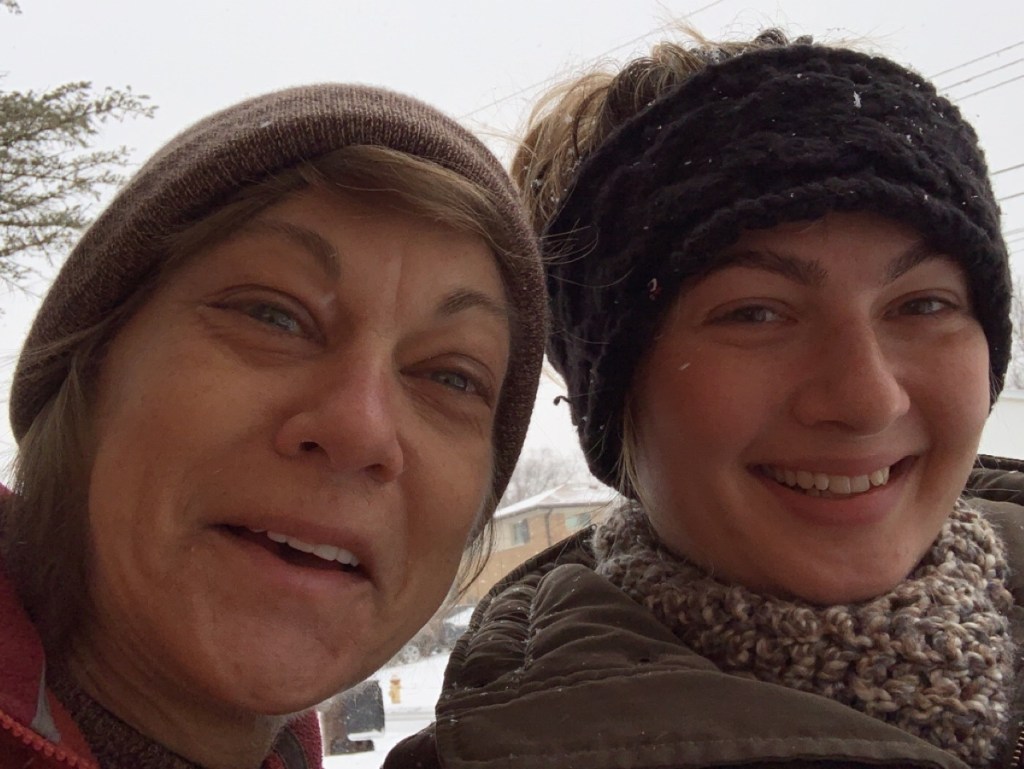
Mom cheered me on as I shoveled the driveway during a snowstorm this winter

Six months ago I found myself painting over the light purple walls of my childhood bedroom with a much more mature shade of white in preparation to move back in with my parents. I think that was the moment my new reality really started to sink in. I was moving back in with my parents at 26 years old and bringing my fiancé with me. This time, however, was so that we could support them. Sacrificing my high maintenance lifestyle, my emergency savings, a career I worked hard for, and most of my free time felt like nothing compared to sacrificing my personal space in that moment, and it’s still something I am learning to cope with now.

“This is what it means to love someone unconditionally” is a constant thought running through my mind these days- A constant reminder that the work I perform as a caregiver is an act of unconditional love. When a family member becomes gravely ill or injured before they are old enough to qualify for social security or even have a living will in place the family is forced to make extremely difficult decisions. Unfortunately for me and my family, that time came in the spring of 2021 when my mom experienced extreme medical complications caused by her type 1 diabetes. After months in various care facilities she was cleared to come home, but as a much different version of the proud and independent woman she once was. She was diagnosed with dementia at 58 years old.

Figuring out how to provide the care mom needed was a hurtle in itself. We tried block scheduling with different family members and close friends, but there always seemed to be gaps. My dad started using more PTO than he ever had before. It was completely unsustainable. Choosing to set up to become mom’s full-time caregiver was the only path forward. Now, mom and I spend every day together, learning to navigate our new reality side by side.

My hope is that by sharing my story and the lessons I’ve learned, I save someone else a little heartache and confusion when they are faced with the same unfortunate situation. This blog is dedicated to helping caregivers locate resources, connect with others caring for a disabled family member, and to share stories that educate and uplift.

I was inspired to create this blog by another caregiver, @carepartnerpattie on TikTok, who shared parts of her journey caring for her mom, and who offered me kind words and support at the beginning of my own caregiver journey.